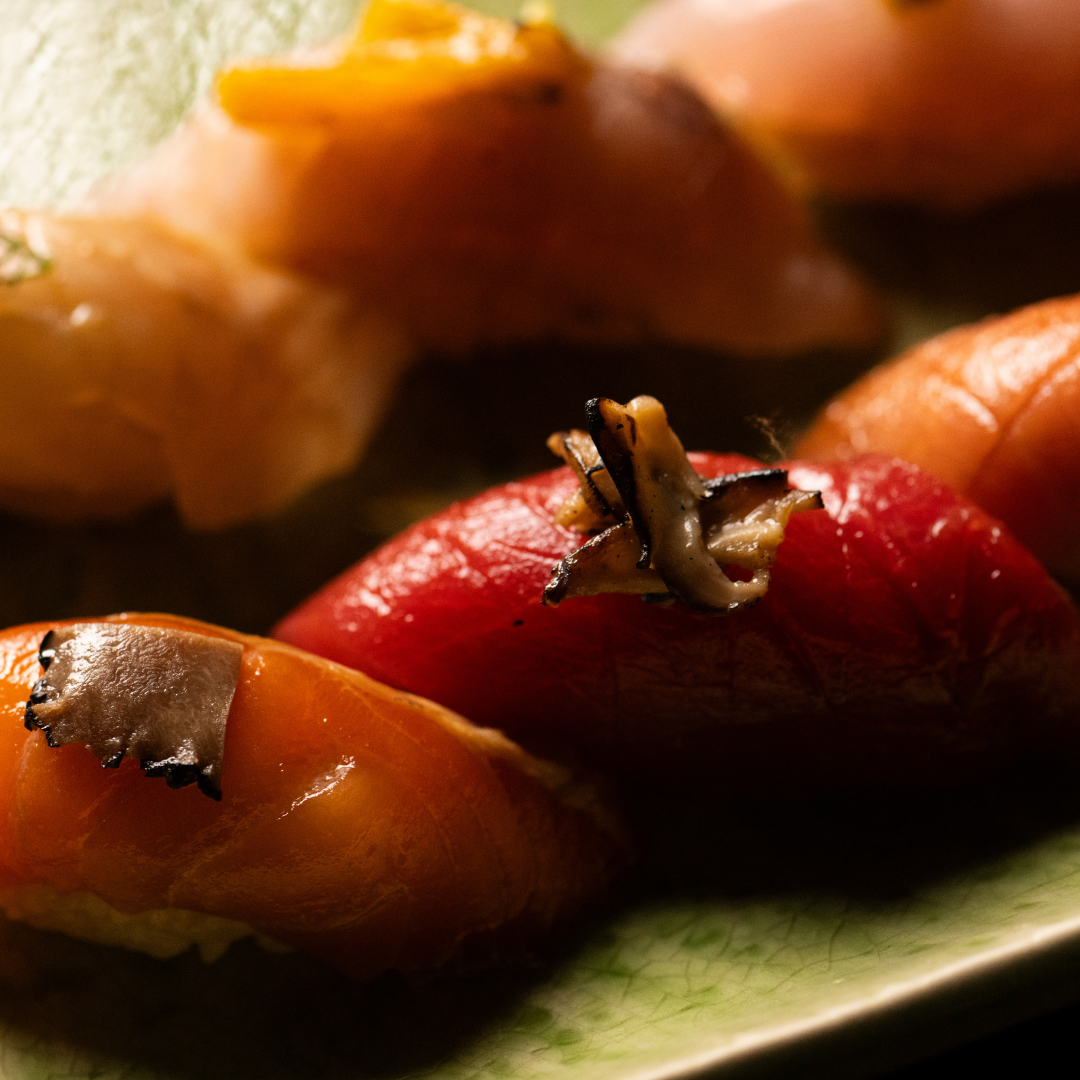
Hospitality marketing is judged on covers and occupancy, not impressions. The properties that fill reliably do three things: they make the room look like somewhere worth photographing, they answer booking-intent questions before anyone has to ask, and they treat local discovery as more important than national reach. AI is useful in this, but almost never where operators expect.
The failure mode in this category is a beautiful feed attached to a quiet Tuesday. Atmosphere generates saves. It does not generate covers unless someone can act on it within about two taps.
What actually drives bookings from social?
Three things, in order.
The room has to look like an occasion. Not just attractive — specific. A corner banquette at golden hour, a particular dish arriving, the bar at the moment it fills. Generic interiors read as stock photography, and stock photography does not make anyone move a Friday reservation.
The booking path has to be one tap. A link in bio that leads to a homepage that leads to a reservations page is three decisions too many. Direct link to the booking engine, always.
Somebody has to reply. The highest-intent question in hospitality is asked in a DM: can you seat six on Saturday, is the terrace heated, do you do corkage. These are bookings waiting to be confirmed, and they expire fast.
Instagram for restaurants and boutique hotels
The format hierarchy has been stable for a while: Reels for reach, Stories for conversion, grid for credibility. Most properties invert this and post their best asset to the grid where the fewest people see it.
Practically:
- Reels are the discovery engine. Movement, food arriving, a room revealing itself. No talking-head explainers.
- Stories close the loop. Availability tonight, a table that just opened, the special before it sells out. This is where the booking link lives.
- The grid is the reference. It is what someone scrolls before deciding you are worth a Saturday. Treat it as a portfolio, not a feed.
- Location tags on everything. Local discovery in hospitality still runs heavily on place tags.
One deliberate omission: hashtag strategy. It has not meaningfully driven discovery in this category for years, and the effort is better spent on the first frame of your Reels.
Local search is the quiet channel
Most hospitality demand starts with a search that includes a neighbourhood, not a brand name. Which makes your Google Business Profile more commercially valuable than your Instagram, and most operators spend a fraction of the attention on it.
- Claim and verify the profile. Real photos, current hours, correct menu link.
- Reviews are the ranking factor after proximity. Ask, consistently, and reply to all of them — especially the critical ones, in public, without defensiveness.
- Keep name, address and phone identical across every directory. Mismatches suppress ranking.
- Answer intent questions on your own site: parking, dress code, dietary handling, whether you take walk-ins, what a meal actually costs. These are high-intent searches and most properties bury them.
Where AI genuinely helps — and where it doesn't
The useful applications in hospitality are unglamorous and operational.
It helps with:
- Personalising pre-arrival and post-stay messaging using data you already hold — stay history, occasion, previous room preference. This is the highest-return application in the category and it is mostly a data-hygiene problem, not an AI problem.
- Triaging inbound messages so that booking-intent questions surface immediately and general enquiries queue.
- Demand and staffing forecasting against historical covers, weather and local events.
- Speeding up production — first-draft captions, translations, resizing.
It does not help with:
- Writing your brand voice. Generated hospitality copy has a texture guests recognise, and in a category selling taste, that recognition is expensive.
- Generating imagery of your property. Guests arriving to a room that does not match the picture is a review problem, not a marketing win.
- Replacing the reply. Automated DM responses to a real booking question read exactly as automated.
The honest summary: AI is a margin tool in hospitality, not a growth tool. It makes a small team behave like a larger one. It does not make an empty room full.
What about influencers?
Cast for engagement rather than reach, and cast locally. At a creator activation we ran at Fontainebleau Miami Beach in April 2026, the highest engagement rate of the day — 8.09% — came from a creator with roughly 12,000 followers, while a creator with 104,000 returned 4.09%. Twenty-two of twenty-three attendees posted, producing 30+ pieces of organic content at a 2.2% average engagement rate with no paid spend.
For a single property, someone with a genuinely local audience is worth several times someone with a large national one. A comped meal for a creator whose followers live in another state is a marketing cost with no path to a cover.
What to stop doing
- Posting the empty room. Rooms photograph best with people in them.
- Discount-led promotion. It fills once and repositions you permanently.
- Ignoring reviews. Every unanswered one-star is a public choice not to care.
- Burying the booking link. If it takes three taps, it is not a booking link.
- Comping creators on follower count. See above.
How long does it take?
Social and content work shows a directional signal at around 90 days and compounds over about six months. Local search on a new domain takes six to twelve. Paid media reads fastest, often within two to four weeks, which is why it is usually the right first move for a property that needs covers this quarter rather than reputation next year.
One Media Society builds brand and social programs for restaurants, hotels and hospitality groups in Miami. See the work, or tell us what you are building.