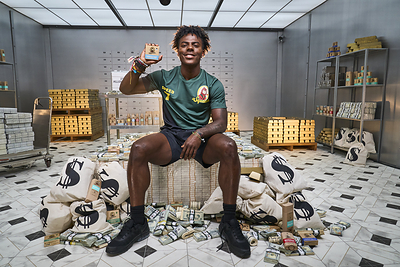
Dr. Squatch is putting $1 million in prize money behind a nine-week scavenger hunt with streamer IShowSpeed instead of buying more television and social ads — and the bet says something bigger about where experiential marketing vs influencer marketing is heading in 2026. Chief Brand Officer John Ludeke told Marketing Dive on August 31 that the Unilever-owned grooming brand chose participation over placement because "people are getting tired" of being advertised at on every platform, all the time.
The short version: Dr. Squatch's "Speedrun: Million Dollar Mission" swaps a single paid influencer post for a real-world game — hidden briefcases, GPS clues and retail tie-ins at more than 4,000 Walmart stores — because brands are learning that a sponsored post no longer moves Gen Z the way a hands-on experience does. That bet is playing out against two conflicting data points: U.S. creator ad spend is still climbing toward $44 billion in 2026, according to the Interactive Advertising Bureau, even as new research from Rival Technologies finds that only 31% of Gen Z actually trusts influencers. Brands are spending more on creators while trusting individual influencer posts less, and the response — from a grooming brand and a travel giant alike — is to build things people can do, not just things they can watch.
What Is Dr. Squatch's "Speedrun: Million Dollar Mission"?
Dr. Squatch announced the contest on Monday, August 31, in partnership with 21-year-old streamer IShowSpeed (Darren Watkins Jr.), whose real-time travel and reaction livestreams have made him one of the most in-demand creators for brands chasing Gen Z attention. The mechanics are built to reward participation over passive viewing:
- 25 challenges spread across nine weeks, running through October 31, 2026, in the U.S., Canada, the U.K. and Australia.
- A briefcase containing a gold bar of Dr. Squatch soap is hidden each week in a different city, with GPS coordinates released gradually via livestream so the location becomes easier to find as the week goes on.
- More than 4,000 Walmart stores in the U.S. and Canada serve as physical hubs, with in-store displays and QR codes linking shoppers into the game.
- Weekly "missions" modeled on Speed's own content — like challenging a stranger to a footrace — can be filmed and posted to TikTok, Instagram or YouTube for a chance to win.
- Free scratch-off tickets, available through a dedicated microsite or bundled with an IShowSpeed Loot Box on TikTok Shop, reveal 25 separate $10,000 prizes.
- The briefcase values escalate over the course of the campaign, building to a $250,000 grand-finale challenge.
The campaign was built with Applied MSCHF, the agency arm of the Brooklyn studio behind viral stunts like the MSCHF Big Red Boots, with additional creative from Echobend Productions and director Kyle Beiermeister. Dr. Squatch and IShowSpeed's team have reportedly been developing the concept together since April 2025, well over a year before launch.
Why Is Dr. Squatch Skipping Traditional Ads for This Campaign?
Dr. Squatch did shoot a basic set of ads to help introduce the contest, but Ludeke was clear that most of the marketing budget is going toward supporting a community of creators rather than a media buy. "We're going to be working with hundreds of different creators and influencers that are going to be out there also participating in the challenges to show people how it can be done, and to help build that content flywheel," he said. "Instead of pushing hard from top down, the goal here is to be a lot more bottom up."
That approach carries real financial risk. As Ludeke put it, "it's pretty easy to calculate how many impressions we could generate" with a straightforward media buy, but the team chose not to optimize purely for reach. The bigger goal was to get people "outside of their house to do something a bit different," treating the campaign as an event rather than an ad unit — a strategy that echoes the approach FX took with its immersive, activation-driven rollout for its nostalgia-driven marketing push for "The Shards", where the network built physical, shareable moments instead of leaning on a conventional trailer campaign.
For Dr. Squatch specifically, "Speedrun" is the latest chapter in a brand strategy that has consistently avoided straight product advertising — from its Manlandia content world to a self-hypnosis campaign to star-driven spots with Sydney Sweeney and Megan Fox. The difference this time is that the audience isn't just watching a creator; they're building the story alongside him.
Why Are Brands Shifting From Influencer Posts to Participatory Experiences?
The Dr. Squatch bet lines up with a wider trust problem the influencer marketing industry can no longer ignore. A Rival Technologies study of 903 Gen Z consumers across the U.S. and Canada, released in late August 2026, asked respondents how much they trusted 14 different types of organizations. The results were not kind to the creator economy:
- Only 31% of Gen Z respondents said they trust influencers — the second-lowest score of any category tested.
- Social media platforms fared only slightly better, at 33% trust.
- AI companies ranked dead last, at just 24% trust, with 73% expressing outright distrust.
- Despite that skepticism, 62% of Gen Z respondents still named social media their top source of news, according to Rival Technologies.
That gap — heavy reliance paired with low trust — is exactly what's pushing brands toward participation instead of paid placement. One Media Society has covered this shift before: our recent piece on why employee-generated content is starting to outperform influencer marketing found a similar pattern, with audiences responding more to people who feel like real participants in a brand than to anyone paid to say nice things about it. Dr. Squatch's answer is to turn customers, not just the streamer, into the content engine. "People love to create content, they love to share it, they love to participate," Ludeke said. "We wanted to give people another mechanism where they could participate and have fun."
Is Creator Marketing Spend Still Growing Despite the Trust Gap?
Yes — and that's the part that makes this moment interesting rather than contradictory. According to the IAB's 2025 Creator Economy Ad Spend & Strategy Report, U.S. creator advertising spend hit $37 billion in 2025, up 26% year over year, and is projected to reach $44 billion in 2026, growing nearly four times faster than the broader media industry. Roughly 48% of creator ad buyers now consider creators a "must buy," ranking the channel just behind paid search and social media in overall priority.
Platforms are racing to formalize that spending. YouTube's rebrand of BrandConnect into its Gemini-powered Creator Partnerships tools, which One Media Society covered earlier this month, is part of the same shift: brands want more structured, measurable ways to work with creators, even as trust in any single sponsored post declines. The money isn't leaving creator marketing. It's moving away from one-off posts and toward campaigns built for actual participation — contests, activations, and content people make themselves rather than content they're simply shown.
This Isn't Just a CPG Play — Expedia Is Running the Same Bet in Travel
Dr. Squatch isn't the only brand betting on IShowSpeed as an experience engine rather than a spokesperson. Expedia named the streamer its official global travel partner in April 2026, kicking off the relationship with a 12-hour livestream of him island-hopping across the Caribbean on a fleet of yellow, Expedia-branded planes, boats and dune buggies. The stream reached more than 400 million people across social platforms, and in the days that followed, search demand spiked for the featured destinations — up 70% for Sint Maarten, 50% for Guadeloupe and 35% for Dominica, per Expedia and reporting from Marketing Dive and Skift. By July, Expedia had evolved the partnership into a shoppable video hosted on a custom Exspeedia.com microsite, converting livestream hype directly into bookable itineraries.
The through-line between a soap brand's scavenger hunt and a travel company's shoppable livestream is the same: both are structured as things a Gen Z consumer can do, not just watch. For hospitality and travel brands specifically, that's a familiar idea — it's the same logic behind the property activations, retreats and in-person gatherings we've broken down in our experiential marketing playbook for hotels, where the highest-performing campaigns give guests something to physically participate in rather than a feed to scroll past.
What Can Hospitality, Wellness and Lifestyle Brands Learn From This Playbook?
Most independent hospitality, wellness and lifestyle brands don't have $1 million in contest prize money or a year-long streamer contract. But the underlying principles translate at any budget:
Treat creators as collaborators, not billboards
Dr. Squatch and Expedia both gave their creator partner real creative latitude instead of a script to read. A boutique hotel or wellness studio can apply the same logic on a smaller scale — inviting a creator to genuinely experience a stay or a class and document it in their own voice, rather than handing over brand-approved talking points.
Give the audience something to do, not just something to watch
The most effective piece of both campaigns isn't the streamer's content itself — it's the mechanism that pulls the audience into the story, whether that's a hidden briefcase, a bookable itinerary, or a guest challenge tied to an in-person visit. This is the core discipline behind the experiential work our team leads through In Good Company, our experiential arm for hospitality and wellness brands building activations and gatherings people want to participate in, not just watch.
Let performance metrics follow, not lead, the creative decision
Ludeke was candid that Dr. Squatch didn't optimize the campaign purely for projected impressions. That doesn't mean brands should ignore measurement — it means the creative idea has to earn attention on its own merits before the media plan tries to amplify it.
How to Build an Experiential Campaign That Builds Trust With Gen Z
Pulling from both the Dr. Squatch and Expedia examples, a few practical principles stand out for any brand testing this shift:
- Anchor the campaign in a real, tangible prize or outcome — whether that's cash, a trip, or a guaranteed experience — rather than an abstract brand message.
- Build in a physical or local component, like Dr. Squatch's Walmart integration or a hotel activation, so digital buzz has somewhere real to land.
- Recruit a wide bench of smaller creators alongside any headline partner, since Dr. Squatch's "content flywheel" depends on hundreds of participants, not one influencer's reach.
- Let the campaign run long enough to build a narrative — Dr. Squatch's nine weeks and Expedia's year-long partnership both allow anticipation to build between beats, instead of front-loading everything into a single sponsored post.
Frequently Asked Questions
What is Dr. Squatch's "Speedrun: Million Dollar Mission" campaign?
It's a nine-week, $1 million prize contest run with streamer IShowSpeed across the U.S., Canada, the U.K. and Australia, combining hidden-briefcase scavenger hunts, social media challenges and in-store activations at more than 4,000 Walmart locations, running through October 31, 2026.
Why are brands choosing experiential marketing over traditional influencer ads?
Because trust in influencers has eroded even as attention has grown. A 2026 Rival Technologies study found only 31% of Gen Z trusts influencers, which is pushing brands toward participatory experiences that let consumers create their own content instead of just viewing a paid post.
Is creator marketing spending still increasing despite the trust gap?
Yes. The IAB projects U.S. creator ad spend will reach $44 billion in 2026, up from $37 billion in 2025, as nearly half of ad buyers now consider creators a "must buy" media channel alongside paid search and social.
How can hospitality and wellness brands apply this playbook on a smaller budget?
By treating creators as collaborators who genuinely experience a stay, class or event and document it in their own voice, and by building a physical or local component — like an in-person activation or challenge — that gives digital buzz somewhere real to land, mirroring what both Dr. Squatch and Expedia have done in 2026.
Dr. Squatch's $1 million bet and Expedia's year-long streamer partnership are extreme versions of a shift every brand is going to have to reckon with: Gen Z will keep scrolling past sponsored posts, but they'll show up for something they get to be part of. One Media Society is a Miami-based marketing team that builds exactly these kinds of participatory campaigns and in-person activations for hospitality, wellness and lifestyle brands — if you're rethinking how creators fit into your marketing mix, our services team can help you design one.