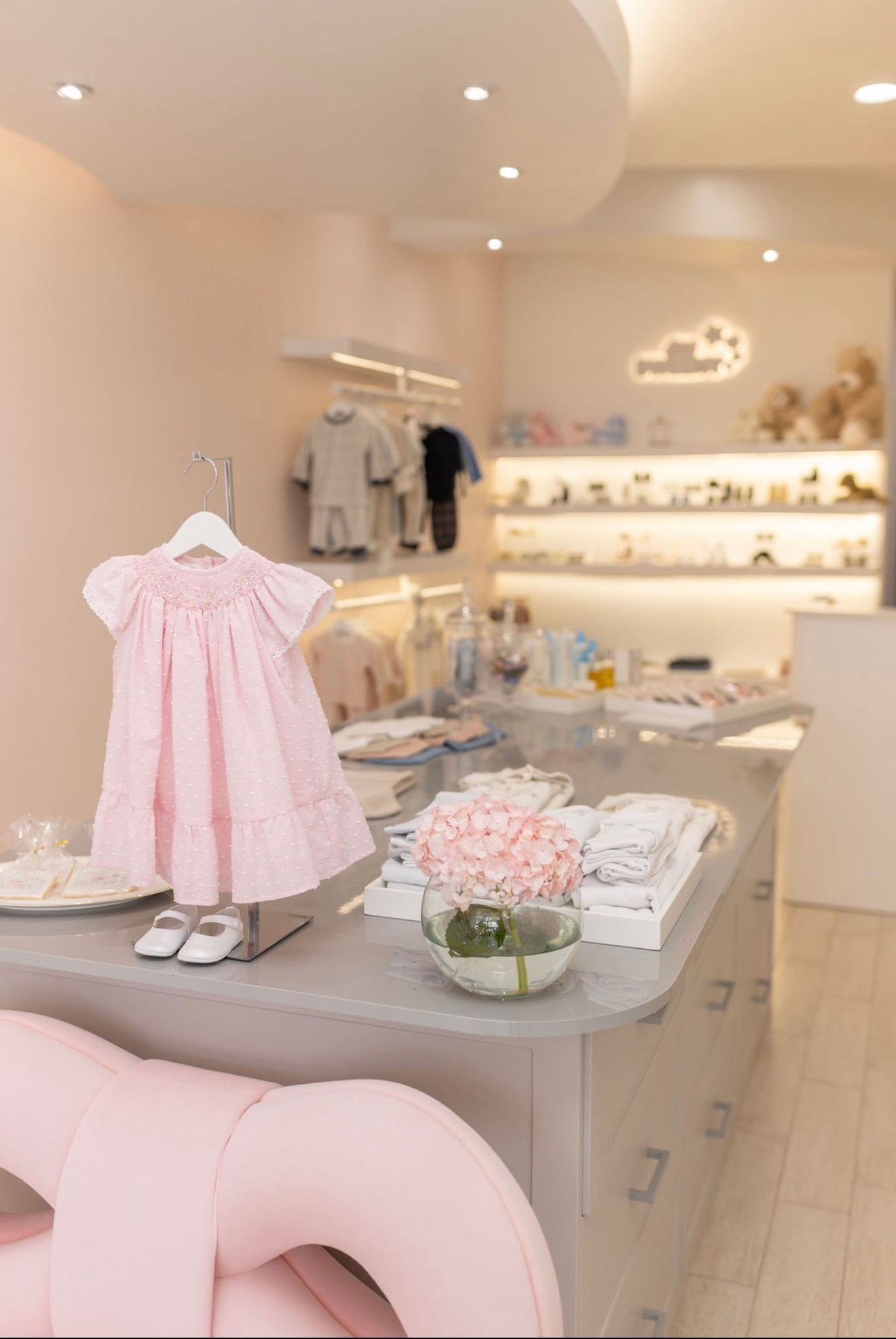
Bebe Sweeny is a children's clothing brand designed in France and crafted in France and Portugal, built around elegance, delicate materials, and timeless detail. But the piece of the brand doing the most marketing work isn't a fabric or a color palette. It's a two-line origin story: a mother whose heart is shared between France and the United States, and the daughter who moved to the U.S. and chose to build the next chapter of the brand alongside her.
The short version: Bebe Sweeny's entire brand identity runs through one specific, ownable narrative, a mother-daughter partnership built across two countries, and every other brand decision, from product to tone, exists to reinforce that same story rather than compete with it.
What is the actual founder story behind Bebe Sweeny?
According to the brand's own guidelines, founder Valerie grew up captivated by French fashion and lifestyle, surrounded by fine materials and timeless design, and built Bebe Sweeny to bring that sensibility into childhood in a way that could travel beyond France's borders. The story deepened when her daughter Deborah moved to the United States and chose to continue the brand alongside her mother rather than separately, forming what the brand's own materials describe as a mother-daughter duo whose shared values and complementary strengths give the brand its soul.
Why does this particular story work so well as a brand foundation?
It explains the product without describing the product
Most children's clothing brands lead with fabric, fit, or price point. Bebe Sweeny leads with a relationship. The elegance and attention to detail the brand is known for isn't presented as a design philosophy in the abstract, it's presented as something Valerie was "surrounded by" growing up and chose to pass forward, which makes the product feel inherited rather than manufactured.
It gives the brand a reason to exist across two countries
A brand designed in France, made in France and Portugal, and sold to a U.S. audience needs a reason for that specific geography to make sense to a customer, otherwise it reads as a supply-chain detail rather than a brand asset. The founder story solves this directly: the brand exists across two countries because the family does. That turns an operational fact into an emotional one.
It sets up a succession story most brands don't get to tell
A mother-daughter continuation narrative gives a brand something rare: a natural next chapter that doesn't require inventing a new story every few years. As Deborah's role in the brand grows, the existing narrative absorbs it naturally rather than requiring a rebrand or a new origin story.
How should a brand with a story like this actually use it in marketing?
The instinct with a strong founder story is often to tell the whole thing once, in an About page or a single launch post, and move on. A better approach treats the story as a throughline that shows up in smaller pieces across everything a brand does: a product description that references why a particular fabric or silhouette matters to the family, a social caption that shows Valerie and Deborah working together rather than only finished product shots, or packaging language that echoes the brand's own words about "little treasures" rather than generic marketing copy. Our full breakdown of this approach is in how to turn a founder story into an ongoing content strategy, and the same throughline logic applies to community-building in our piece on building a cult following for lifestyle brands.
What can other family-founded or heritage brands learn from this?
Bebe Sweeny's approach generalizes directly to any brand with a real family or founder relationship behind it: a restaurant passed between generations, a wellness studio started by a parent and continued by a child, a design brand built by siblings. The lesson isn't to manufacture a family story that doesn't exist, it's to resist the urge to bury a real one under generic brand language when it's already sitting there, doing more persuasive work than a mission statement ever could.
Frequently asked questions about founder-story branding for product brands
Does a founder story work for product brands, not just service businesses?
Yes. Product brands, especially in categories like childrenswear, food, and wellness, benefit from a founder story because it gives an otherwise interchangeable product a specific reason to be trusted and chosen.
How much of a founder's personal story should a brand actually share?
Enough to be specific and memorable, focused on the parts that explain the brand's values or decisions, rather than unrelated personal detail. Bebe Sweeny's story works because every detail shared, the two countries, the mother-daughter partnership, ties directly back to why the product looks and feels the way it does.
What happens to a founder story as a brand grows or changes leadership?
A well-built founder story can absorb succession naturally, as it does with Bebe Sweeny's mother-daughter structure, rather than requiring the brand to discard its narrative and start over.
Should a founder story be on the homepage or buried in an About page?
It should be threaded throughout the site and content, not confined to a single page. A homepage can carry a short, punchy version with a link to the fuller story, while product pages, social captions, and packaging carry smaller consistent echoes of it.
One Media Society is a Miami-based digital marketing agency that helps founder-led and family-founded lifestyle brands like Bebe Sweeny turn their real story into their strongest marketing asset. See more of this kind of brand storytelling work on our case studies page.